Here’s a great article from the Gig Harbor History Museum about the International Regatta Trophy.
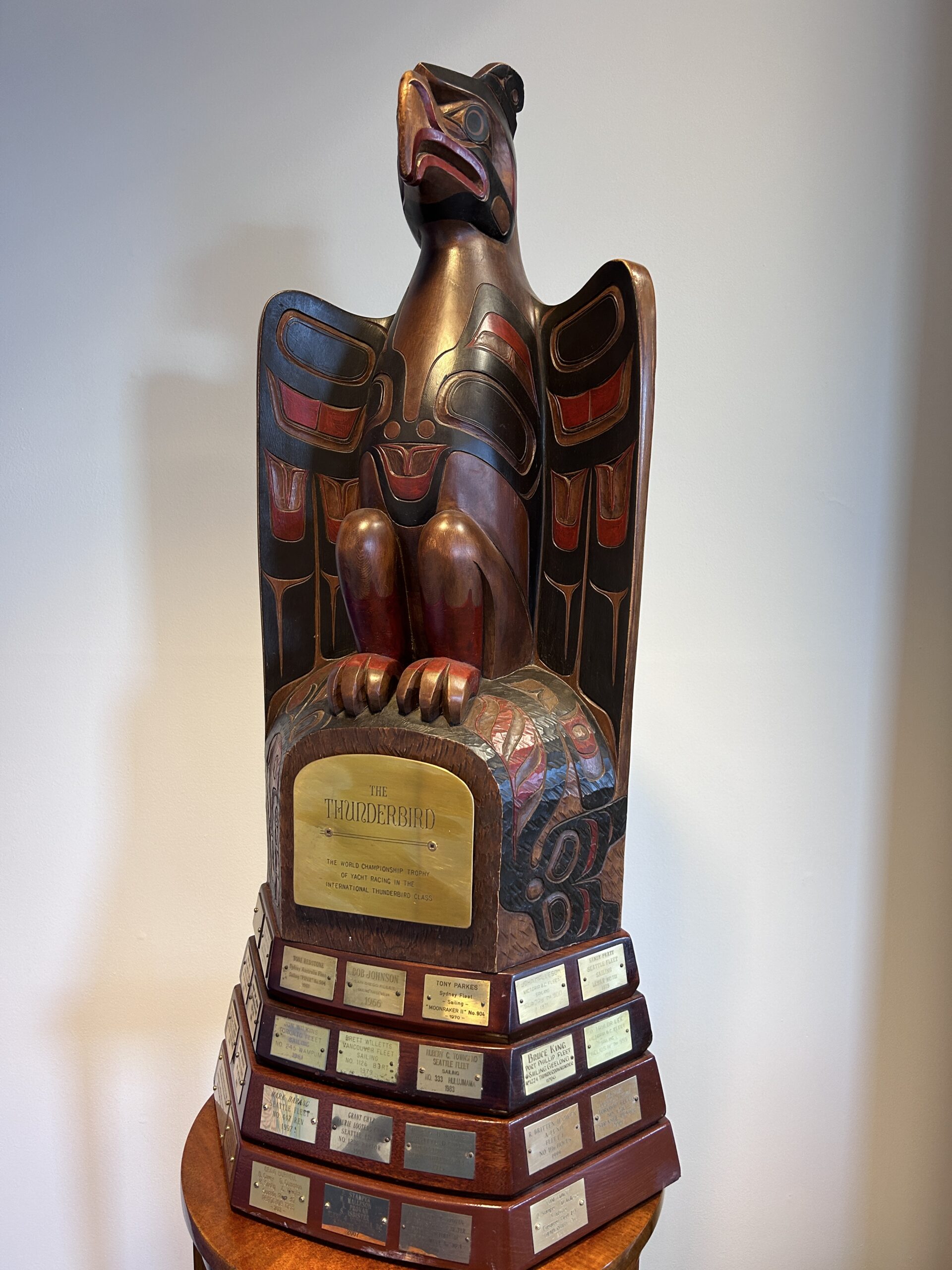
Synopsis: The piece tells the story of how the long-unknown creator of the Thunderbird International Race Trophy was finally identified through archival research. The trophy—an intricately carved wooden thunderbird in Northwest Coast Indigenous style—has been awarded to winners of the Thunderbird class world championship since 1966 and is now housed at the Harbor History Museum.
For decades, the identity of the carver was a mystery. Despite efforts by enthusiasts and museum staff, only weak leads (including speculation about well-known carvers like Tony Hunt Sr. or Jr.) were found. The breakthrough came accidentally: while reviewing archival materials, the museum director opened the wrong box and discovered a 1965–66 newsletter containing a contemporaneous magazine reference. That document clearly stated that the trophy had been commissioned from Bill Holm, a respected scholar and carver of Northwest Coast Indigenous art.
Holm was a significant figure—both an academic authority on Indigenous formline design and a skilled practitioner—making the trophy not just a sailing prize but a culturally meaningful artifact. The carving itself was made from Alaska cedar Holm found locally, reinforcing its regional and artistic significance.
The article frames this discovery as both a historical resolution and a reminder of how easily important details can be lost—and rediscovered—through careful archival work. It also highlights the trophy’s broader meaning: a link between the Thunderbird sailboat’s origins in Gig Harbor, the global sailing community, and the artistic traditions of the Pacific Northwest.